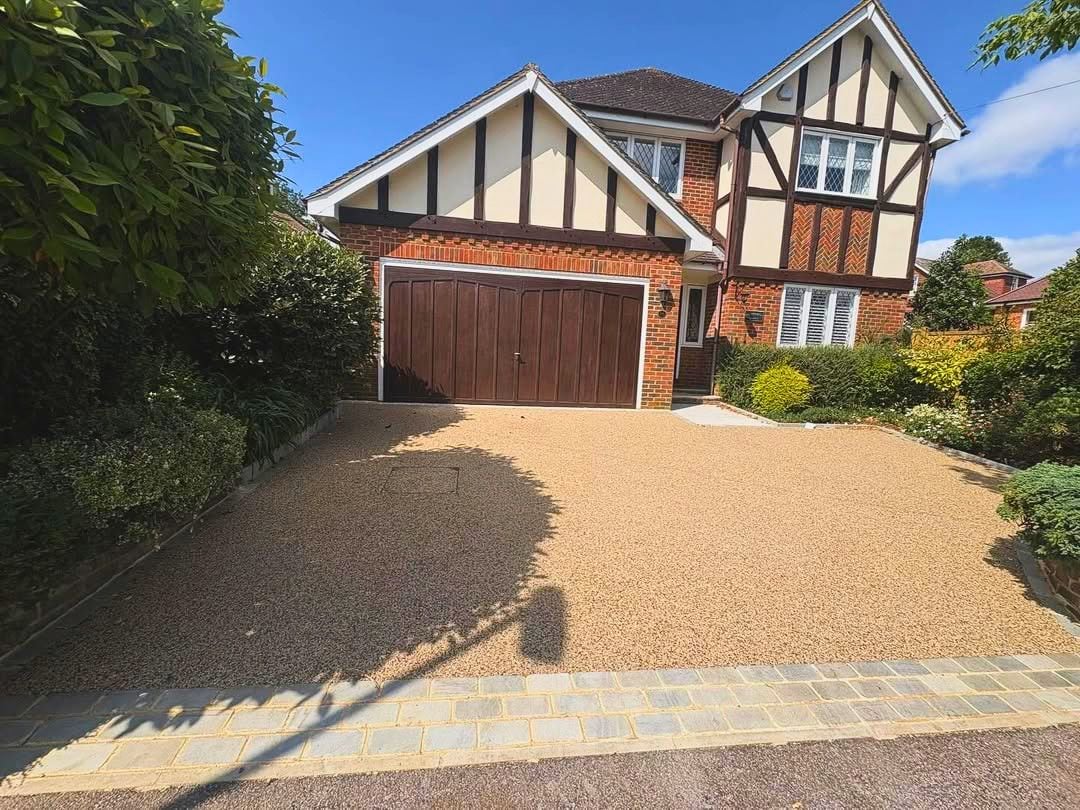
Resin Driveway Pros and Cons: What Homeowners Should Know
The main resin driveway pros and cons, from drainage and planning rules to upkeep, laying weather and the resin itself.

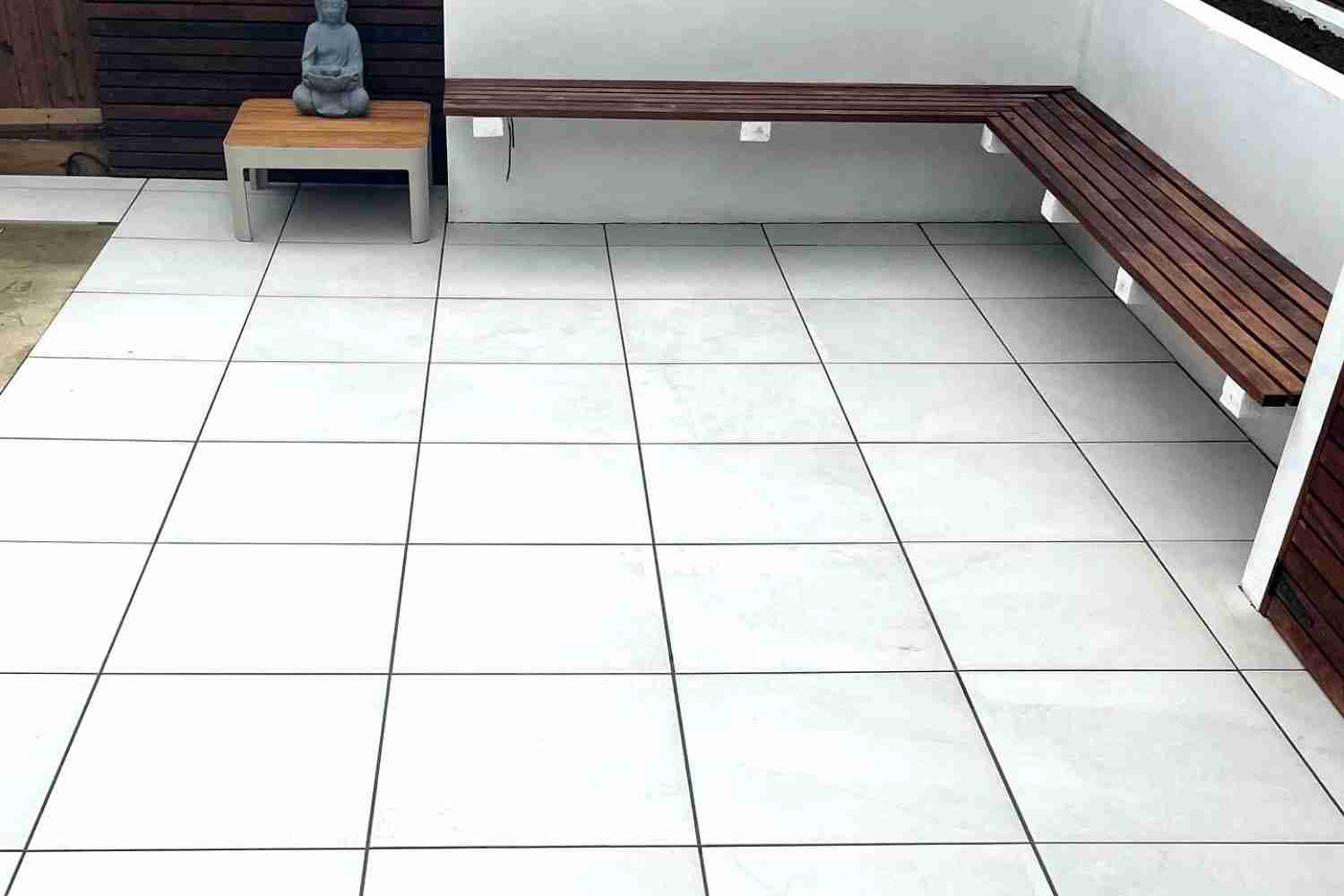
A patio should dry off soon after the rain stops. If yours still has puddles hours later, the patio drainage isn't working as it should.
Poor drainage is easy to miss in summer. Then autumn arrives, the rain sets in, and the same wet patches appear every time. Left alone, standing water can stain the stone, turn it green and make it slippery. In the worst cases, it can push damp towards the house.
The good news is that most problems have a clear cause. Below, we explain the signs to look for, why water collects, and the fixes that work.
A puddle during a heavy downpour is normal. What matters is how long it stays. On a well-built patio, surface water runs off within minutes and the stone soon starts to dry.
These are the warning signs worth looking out for:
One sign on its own after a storm isn't a worry. If the same problems come back every time it rains, the patio drainage needs looking at.
There's rarely a single cause. Often it's a mix of how the patio was laid and the ground underneath it.
Every patio needs a slight slope so rain runs off. This slope is called the patio fall. Without it, water has nowhere to go and simply sits on the surface. If the fall runs towards the house, it sends water straight to the walls.
When the ground below a slab settles, a dip forms. Water collects in the dip after every shower. Over time, the extra water softens the ground further and the dip gets worse.
A patio is only as good as what's underneath. Slabs need a firm, well-compacted sub-base and a full bed of mortar. Slabs laid on a few dabs of mortar leave hollows below. Water fills those gaps, stains the stone and can crack it when it freezes.
Drains, gullies and channels fill up with leaves, silt and moss. Once they're blocked, the water backs up onto the paving. Autumn is the worst time for this.
Many gardens around St Albans and Harpenden sit on heavy clay with flints. Clay drains slowly. So water that runs off the patio may have nowhere to soak away, and it collects at the edges.
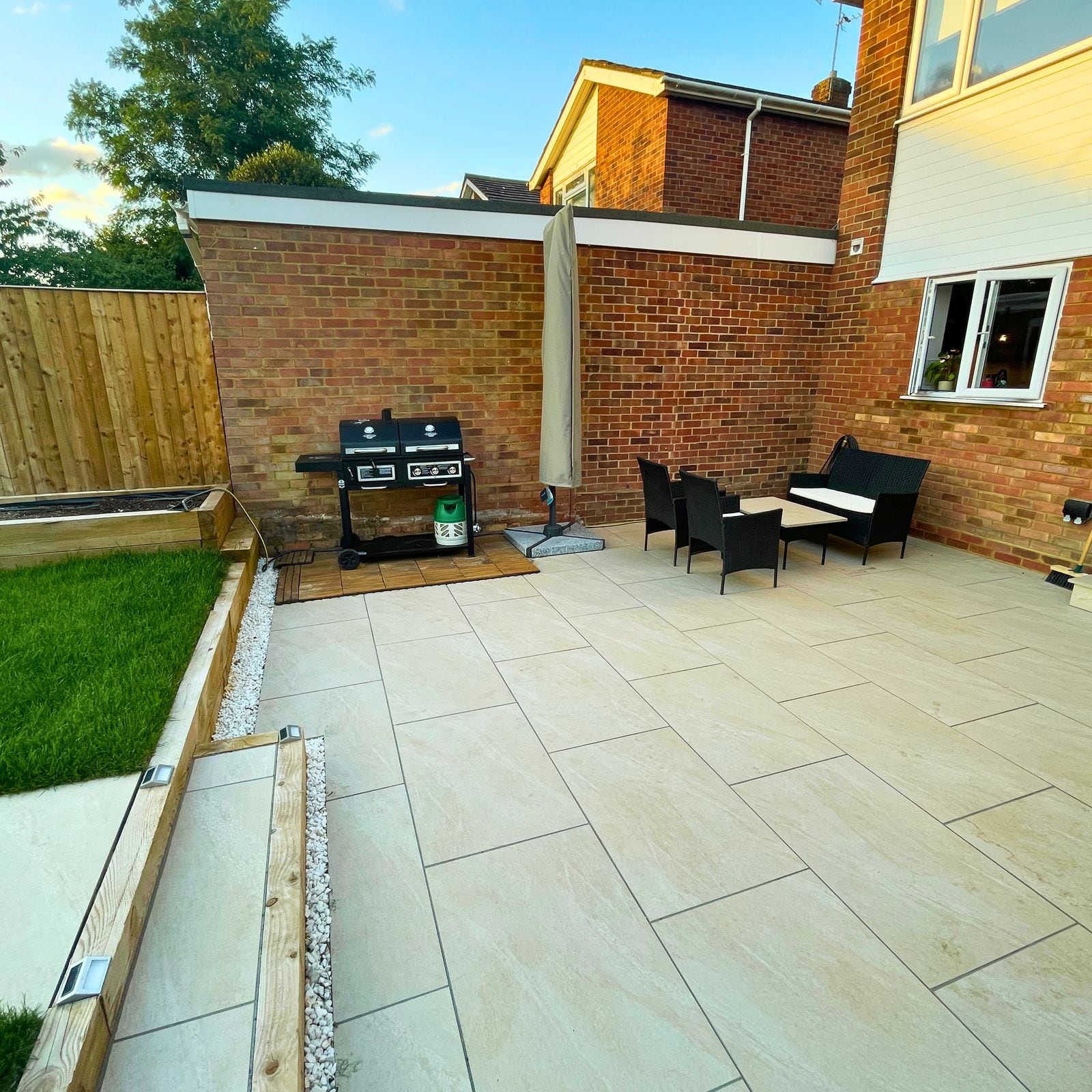
A typical patio fall is about 1 in 60 to 1 in 80. That works out at roughly 12 to 17 mm for every metre. It's enough to move water off the surface, but you won't notice it when you put a table down.
The fall should run away from the house. It can lead to a lawn, a border, a drain or a channel. On a large patio, we may split it into areas that fall in different directions.
Height matters too. The finished paving should sit at least 150 mm below the damp-proof course of the house. That gap stops rain splashing up the wall and bridging the damp-proof layer.
The material changes things slightly. Porcelain soaks up almost no water, so all of it runs off the top. That makes an accurate fall even more important. Natural stone, like this Indian sandstone patio in Harpenden, absorbs a little water. It still needs the same fall, but it can stay damp for longer in shady spots.
Sometimes a patio can't fall away from the house. The most common case is a level threshold, where the patio runs flush with bi-fold or French doors. There's no room for the usual 150 mm step down.
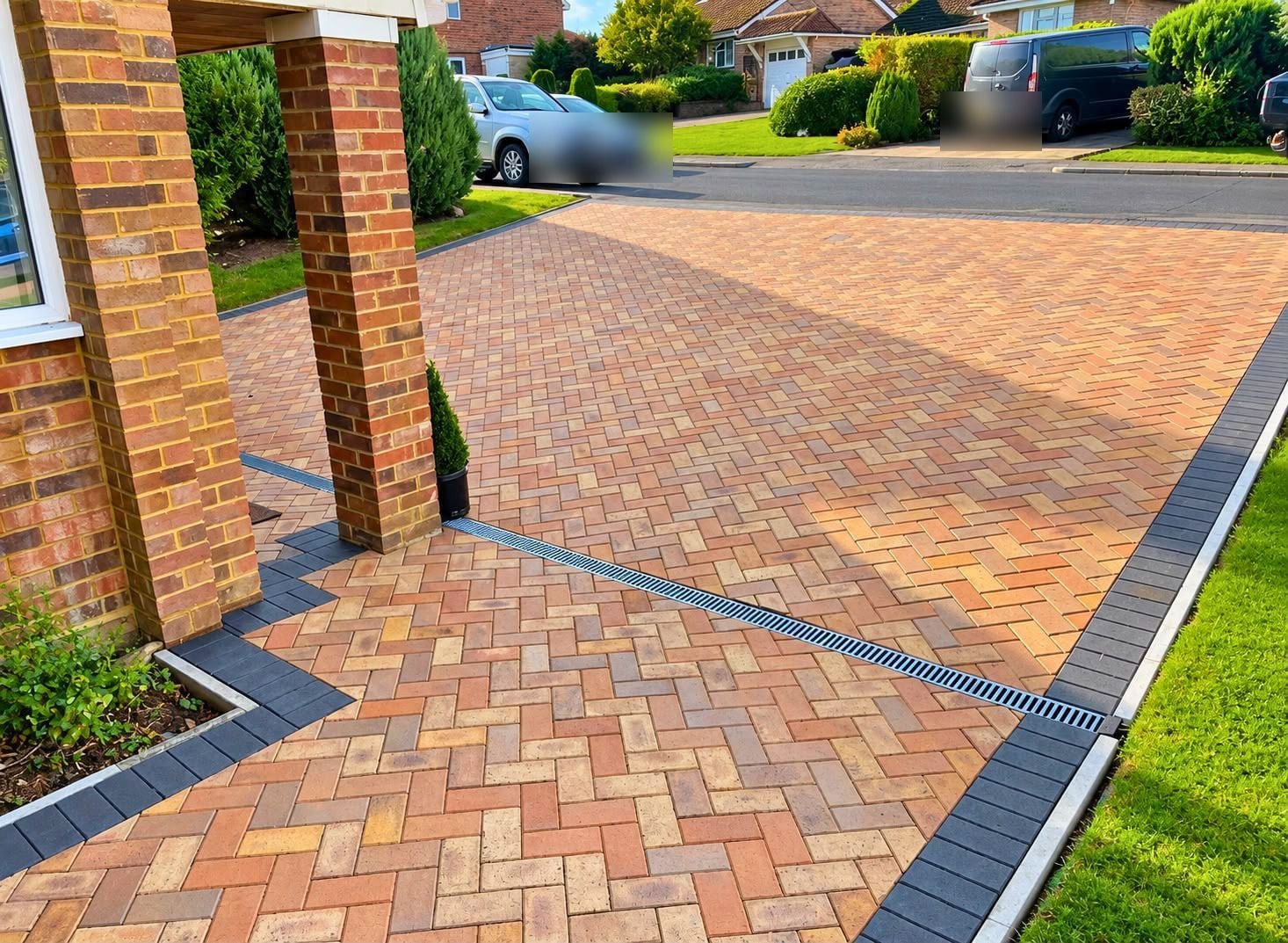
Here, a patio drainage channel is the answer. It's a narrow, slotted drain set into the paving, right along the doorway. Rain falls through the grating and is carried away to a drain or soakaway.
Channels also help on large patios, and where paving meets a wall at the bottom of a slope. Slot drains are the slimmest option. They leave just a thin line in the paving, which suits a modern porcelain patio.
Sometimes, yes. It depends on why the water is there. Start with the simple checks first.
A soakaway has to be in the right place. Building rules say it should normally be at least 5 metres from the house. On heavy clay, it also needs to be large enough to cope.
If the whole patio falls the wrong way, there's no quick fix. The only lasting answer is to lift it and re-lay it with the right fall. The good news is that most slabs can be cleaned and reused.
It can do. In England, paving over 5 square metres of a front garden may need planning permission. It does if the surface is impermeable and the water doesn't drain to a lawn or border.
Permeable paving, gravel and resin bound surfaces avoid this, because the water soaks through. The rules are set out in the government's guidance on permeable front gardens. The Planning Portal also has a clear summary. Back garden patios don't usually need permission, but good drainage still matters.
Drainage is far easier to build in than to add later. When we plan a new patio, we look at where the water will go before anything else.
It's the groundwork you never see that keeps a patio looking good for years. You can read more about how we work in our process.
It's one of the best. Dry summer weather hides drainage problems. A run of autumn rain shows you exactly what happens when the ground is wet.
After the next heavy shower, take a look outside. Where does the water collect? Which way does it run? How long does it take to clear? Take a few photos too. They're very useful if you speak to a landscaper about a fix.
Autumn is also a good time to plan. Planning a new patio or a wider garden makeover next year? Then the drainage can be designed in from day one. The RHS has more advice on algae and moss on hard surfaces and on waterlogged lawns.
A puddle is only the symptom. Good patio drainage comes from the right fall, a solid base and somewhere for the water to go. Get those right and your patio will stay dry, safe and good-looking for years.
Does your patio hold water? Or would you like a new one built properly from the start? We'd be happy to help. We build patios and paving across St Albans, Harpenden and Hertfordshire. All our work is backed by our 5-year guarantee.
Most patios are laid with a fall of about 1 in 60 to 1 in 80. That's roughly 12 to 17 mm per metre, running away from the house. Porcelain needs an accurate fall because it absorbs almost no water.
The usual causes are a missing fall or one towards the house. Sunken slabs, a weak base or a blocked drain are also common. Heavy clay soil can make it worse, because the water has nowhere to soak away.
You need one where the patio can't fall away from the house. The most common example is a level threshold at bi-fold or French doors. Channels also help on large patios and at the bottom of slopes.
Often, yes. Clearing drains, re-laying sunken slabs or adding a channel can solve many problems. If the whole patio slopes the wrong way, it needs lifting and re-laying with the right fall.
We couldn’t be happier with the work carried out by Greg and the team at Groundscape. They installed a new patio, laid fresh turf and put up new fencing which has transformed the space. Communication was excellent from start to finish - Greg was quick to respond to any questions and kept us updated throughout. We were especially impressed to receive a detailed quote the same day that Greg came out to look at the garden. The team’s attention to detail was exceptional and everything was finished to an extremely high standard. The team worked efficiently, kept the area tidy and clearly take real pride in their work. Highly professional, reliable and friendly - we would absolutely recommend Groundscape to anyone looking for quality landscaping.
We had planned to refurbish our patio last year but never got around to it. I had got a very competitive quote from Greg so gave him a call and a year later he remembered us. We agreed some dates which happened to fall over the hottest bank holiday ever! But despite the intense heat and sunshine the team worked hard all the way through it and delivered an incredible transformation, we just had to keep the guys topped up with ice cream and iced drinks. We wouldn’t hesitate recommending Greg and his team.
We couldn’t be happier with the fabulous job Groundscape did replacing our patio. From start to finish, all of the team were professional, punctual and really skilled at what they do. Greg took the time to understand exactly what we wanted, offering helpful suggestions, and the results exceeded our expectations. We love our new patio and it has completely transformed our outdoor space. The team showed great attention to detail, and they kept everything clean and organized throughout the project. Greg was always checking that we were happy with the work and he obviously cares about customer satisfaction. We highly recommend Groundscape. They made the whole process easy and stress-free, and we were so happy with the final result.
We are delighted with the work carried out in our garden by Greg and his team. From the very first conversation, they took the time to really listen to what we wanted and offered thoughtful suggestions that made the end result even better than we’d imagined. The project covered new fencing, a patio, and a pergola, and every single element has been finished to an incredibly high standard, and the attention to detail throughout is something we really noticed and appreciated. Greg and his team were genuinely a pleasure to have around. Nothing was too much trouble. They also kept brilliantly to both the timeline and the budget agreed from the outset; no nasty surprises, just exactly what was promised, delivered when it was promised.
Greg and his team were great when organising our back garden project. Removing existing astro turf, paving stones and shale beds, preparing and flattening the ground then turfing. It's created a much safer space for our daughter to run around on come the better weather in the spring. Lovely folk and very reasonable value too. Would highly recommend.
This is the second time we've used Greg and Groundscape, having originally chosen them because Greg came highly recommended by others, and I can honestly say I couldn't agree more with those recommendations. The first job Greg completed for us was extending the patio in front of our new garden room. This time, we needed another patio extension for a new pergola, which involved joining the two existing patios and required some quite intricate work and creative design. I genuinely cannot believe what an incredible job Greg and his team did. Unfortunately, our porcelain paving slabs had been discontinued, so we had to buy an entire pallet of 42 slabs when we only needed around 30. Rather than waste them, we decided to make full use of every slab if possible, and it turned out to be the best decision and design we could have made — so, in hindsight, a real blessing! What Greg and his team achieved went far beyond simply laying a patio. It was a real demonstration of their experience, craftsmanship and skill. They worked for over 12 hours to complete the job in one day and somehow managed to fit in an extra full row of paving because they didn't damage a single porcelain slab — something that takes real skill and precision. The finished result completely transformed our garden. It has given us much more usable patio space and, most importantly, allowed us to position our new pergola in an even better location than we'd originally planned. Even more impressively, they managed to use every single slab we had. If even one had broken, our original plan wouldn't have been possible and we had a backup design ready, but thanks to their skill, it simply wasn't needed. Greg also returned afterwards to securely bolt down the pergola and make adjustments to the patio to bury and extend the pergola's electrical cables, leaving everything looking really neat and well finished. This extra attention to detail was hugely appreciated. Greg and his team are fantastic to work with — friendly, professional, incredibly hardworking and clearly take enormous pride in what they do. This wasn't a straightforward job with fixed drawings; we knew what we wanted overall, but the finer details evolved throughout the day as we discussed ideas and made decisions together. Greg's experience, attention to detail and eye for design meant he was able to adapt the layout as the project progressed and achieve a result that was even better than we'd imagined. I genuinely can't fault Groundscape. If you're looking for landscapers with exceptional skill, attention to detail and workmanship, I wouldn't hesitate to recommend Greg and his team. We'll absolutely be using Groundscape again for future projects and wouldn't consider going anywhere else.
So happy with my new garden - it has been completely transformed! The team worked hard and their skills, expertise and attention to detail were in evidence daily. A very professional and friendly team who garnered praise from many of my neighbours, of which, several have since sourced them for their own projects. Honestly a pleasure from start to finish.
Greg and the team are very knowledgeable, hardworking, reliable and courteous. Really pleased with the finished job which was completed on time at a competitive price. Highly recommended, thanks!
Greg and his team were an absolute pleasure to deal with throughout our recent drive build. They really listened to what we wanted and worked tirelessly to deliver a really fantastic result. Exactly what we wanted. We also really appreciated the way they kept us updated at each stage and the care they took with the grass verges and neighbours property lines through the messy part of the build. Thanks very much Groundscape we highly recommend you!
Absolutely over the moon with the landscaping work. From start to finish the team were professional, punctual and properly organised. They turned up when they said they would (rare these days!), kept everything tidy and clearly take pride in what they do. The attention to detail really stood out — clean lines, solid finish, and no shortcuts. They talked us through the plan, offered helpful suggestions, and delivered exactly what was agreed. The transformation has completely changed the look of the garden. If you want landscaping done properly without stress, these are your people. Wouldn’t hesitate to recommend and will definitely use again.
This Company were fantastic at helping us out with a relatively small job at short notice. Excellent communication, politeness, efficiency and helpful. Thank you Greg and Jamie!
Would highly recommend. Transformed my garden with a very quick turnaround. Could not be happier with the end result.
We used Greg and his team in two phases, and we’re extremely happy with the results. Firstly they did groundworks to prepare the garden for the installation of our garden office/room, which involved demolishing a garage, two sheds and a concrete base. Once the garden room had been built they came back and completely transformed our garden. They levelled it off, returfed, installed composite decking, new fencing, block paved path and new gate. The garden is now so much more functional than before and it means we can go out to the studio without having to cross the garden when it is wet. The team had to navigate staff absences from covid and challenges in obtaining materials, but they did the job with great attention to detail and professionalism throughout.
The team are fantastic. They know exactly what they are doing and do it with a great eye for attention to detail. Not once did my husband utter the words “I could do it better”…..high praise indeed. Would totally recommend
They have transformed our backgarden. The team were great and very professional. The end product is brilliant. They said it would be 2 weeks and it was.
The main resin driveway pros and cons, from drainage and planning rules to upkeep, laying weather and the resin itself.
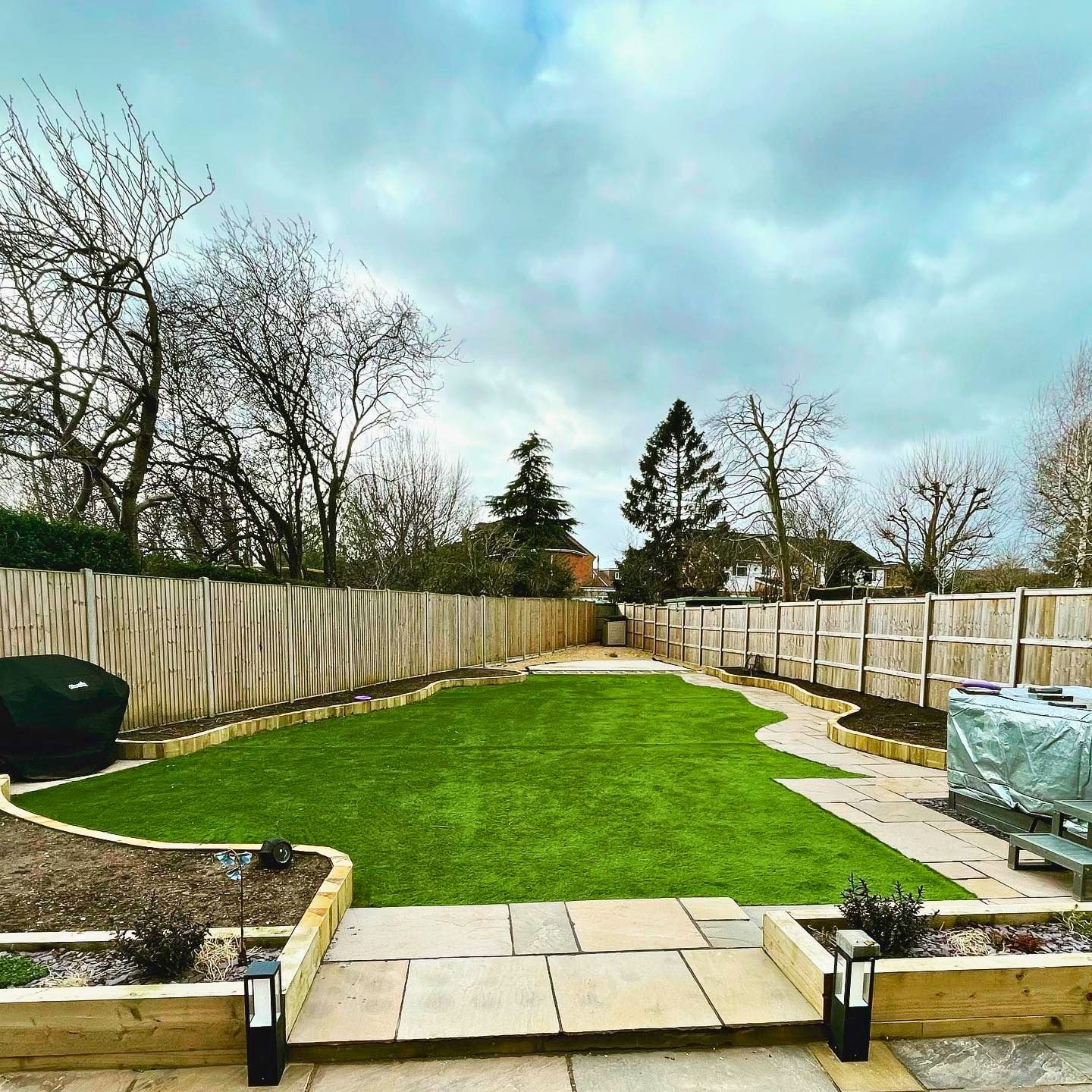
Practical tips to plan your garden this autumn, so the work can be finished and ready to use by spring.
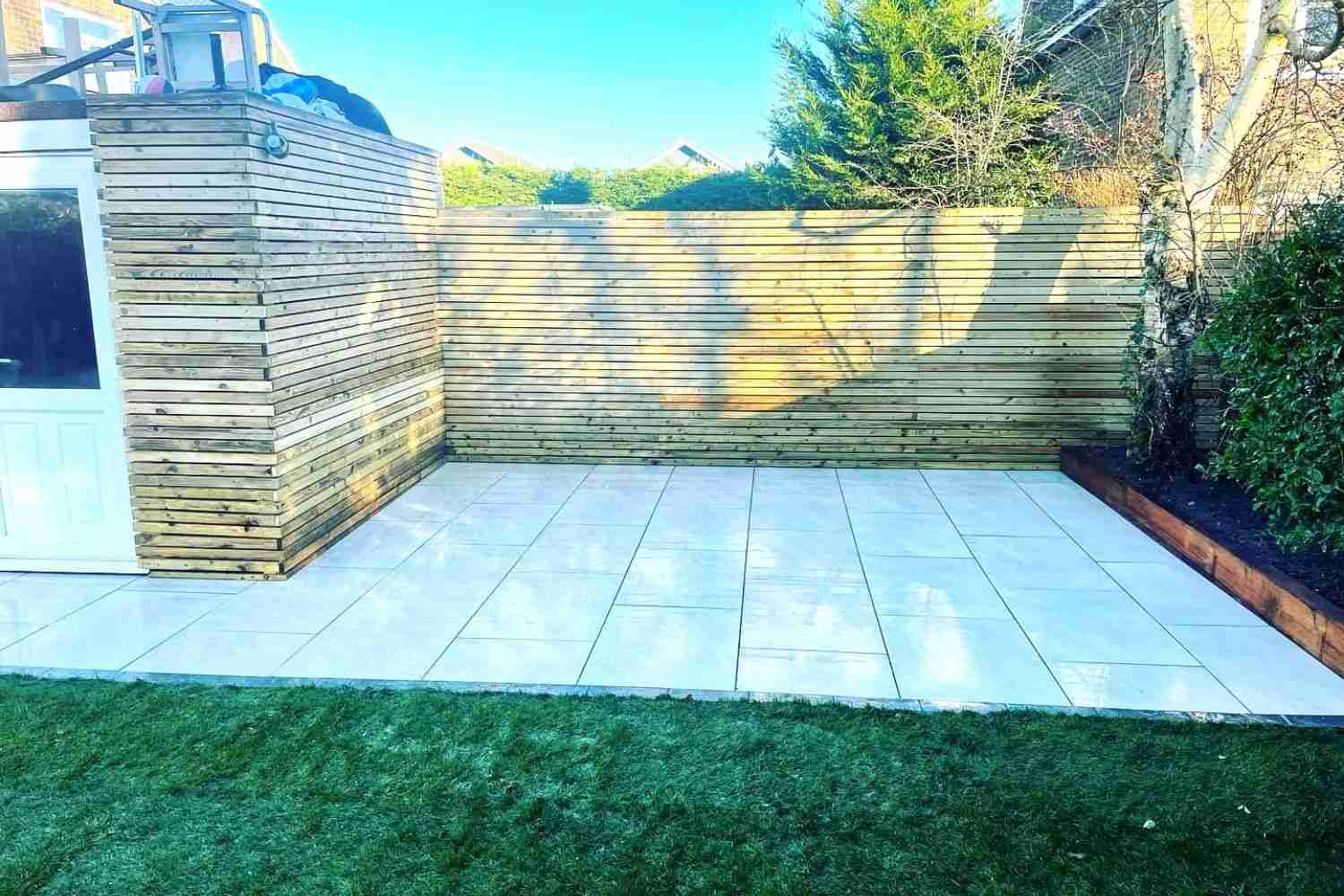
Want a garden that looks good without taking up every weekend? These low maintenance garden ideas cut the work, not the style.
Whether your patio holds water or you're planning a new one, we can help. Tell us a little about your garden and we'll get back to you within 24 hours to arrange a free visit and quote.
Prefer to talk? Call us on 07588 352484 or email info@groundscapeal5.co.uk.